

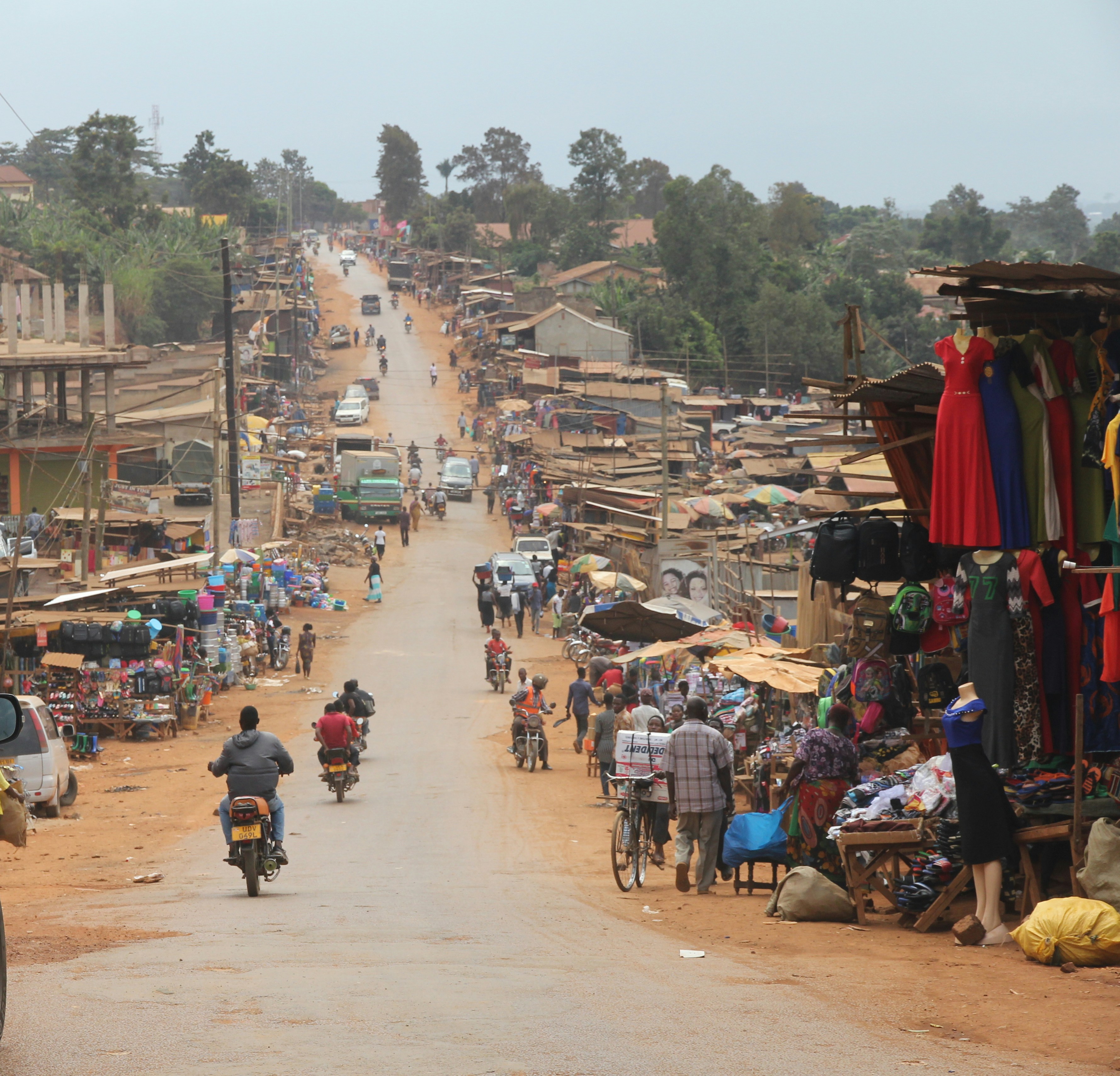
By sunrise, the charcoal stove is already burning. Above a small roadside restaurant, an electricity line runs through the trading centre, a visible sign of Uganda’s expanding power system. Electricity lights the premises, charges a phone and occasionally powers a refrigerator. But the meals sustaining the business are still prepared over charcoal. When electricity is interrupted, some services stop. When charcoal prices rise, the already narrow profits shrink.
This enterprise is connected to the national power grid, but its energy transition is incomplete.
Its experience captures a wider Ugandan story. For years, the electricity debate centred on shortages, load shedding and the search for new generation. That picture has since changed. Installed capacity rose from about 400 megawatts in 2000 to 2,098.2 megawatts by the end of 2025, with renewable sources accounting for 95.2 per cent of the total (ERA, 2026).
This, is substantial and evidential progress. But it has also changed the development question. Uganda must now ask not only how much electricity it can generate, but what that electricity enables people to do. The power line represents what the country has built but the stove beneath it reveals what infrastructure alone has not transformed. Can Uganda’s energy system reliably and affordably power livelihoods?
A Green Grid Above a Biomass Economy
The restaurant’s mixed energy use is not exceptional. Electricity may provide lighting, communication and refrigeration, while cooking, heating and production continue to depend on charcoal, firewood, diesel or petrol. Although Uganda’s grid is overwhelmingly renewable, solid biomass accounts for about 90 per cent of final energy consumption, while around 95 per cent of households rely on wood or charcoal as their primary cooking fuel (IEA, 2023a; IEA, 2023b).
Uganda can therefore possess a green electricity system while much of its wider energy economy remains tied to biomass. The transition visible in generation statistics has not yet reached kitchens, workshops, and small enterprises with equal force.
For the restaurant owner, charcoal is not simply an old fuel waiting to be replaced. It is familiar, widely available, compatible with existing cookware and purchased in quantities that fit daily cash flows. Switching to electricity simultaneously requires reliable supply, suitable appliances, affordable tariffs and confidence that the investment will pay. Continued charcoal use can be less a rejection of change than a rational response to the economics of sustaining a livelihood.
The scale of the clean cooking challenge is considerable. Uganda would need to deploy more than one million improved biomass or clean cooking stoves each year to reach universal access by 2030 (IEA, 2023a). Yet distributing technologies alone will not deliver the transition if appliances, fuels and financing remain beyond users’ reach. Clean cooking policy must begin with how people earn, spend, cook and manage risk.
The same applies to electricity access. A meter may improve lighting without transforming the enterprise behind it. Productive equipment is expensive, credit is limited and interruptions can erase narrow margins. Uganda’s own National Energy Compact acknowledges that limited financing for appliances and productive-use equipment suppresses electricity demand, while fragmented planning across generation, distribution and productive-use programmes reduces the economic impact of electrification (Government of Uganda, 2026).
The missing link is often the finance, skills, machinery, markets and business support that turn electricity into economic value. What would planning look like if each connection were judged by the livelihood it strengthens rather than only by the meter it installs?
Whose Transition is Uganda Building?
The restaurant owner rarely appears directly in the models, investment frameworks and technology roadmaps shaping Uganda’s energy future. Her needs may be represented through demand projections, affordability assumptions or adoption rates, but she is seldom involved in defining the questions those tools answer.
Uganda is not short of modelling activity. A United Nations-supported programme used MAMS, CGE-UNDESA, OSeMOSYS, WEAP and CLEWs between 2014 and 2017. Uganda’s 2022 updated Nationally Determined Contribution used LEAP, GLEAM and Excel-based models to project its greenhouse gas emissions trajectory (UN DESA, n.d.; Government of Uganda, 2022). More recently, the Climate Compatible Growth programme and partners have strengthened Africa’s modelling ecosystem through the Energy Modelling Platform for Africa, providing African analysts with practical training in open-source energy and financial modelling tools (CCG, 2025). These efforts have helped democratise modelling knowledge and reduce reliance on costly external consultancy.
These tools can illuminate investment needs, technology trade-offs, emissions pathways and interactions across energy, water, land and the economy. The concern is not that Uganda works with international partners, models or finance. These resources remain important. The harder questions are who frames the problem, sets the assumptions, controls the data and retains the capacity to update the analysis after a project ends.
External benchmarks can become substitutes for local priorities when projects are judged mainly by megawatts installed, emissions avoided, technologies deployed or connections delivered. These indicators may say little about whether a restaurant lowers its costs, a farmer preserves produce, a workshop buys better machinery or a household withstands fuel-price shocks.
National ownership thus infers more than listing Ugandan institutions as partners. It requires local researchers, policymakers, businesses and communities to shape questions, interrogate assumptions and revise pathways when circumstances change. A transition can be technically credible and internationally celebrated while remaining weakly connected to the lives it is intended to improve. Who defines success in Uganda’s energy transition, and whose experience determines whether that success has been achieved?
The Test Beneath the Power Line
Uganda’s next energy chapter cannot be written through generation targets, connection numbers or technology deployment alone. These become development achievements only when they lower business costs, raise productivity, reduce vulnerability and expand choice.
New infrastructure must therefore be planned alongside productive equipment, affordable finance, local skills, reliable markets and enterprise support. Clean cooking programmes must respond to users’ economics rather than assume that distributing an appliance guarantees adoption. Energy models must look beyond least-cost technologies to ask who benefits, who carries the risks and which opportunities are created or foreclosed.
As AISESA gathers in Kampala in 2026, powering livelihoods should be more than a thematic area. It should become a standard for judging the transition itself.
By evening, the restaurant beneath the power line is still serving customers. The electric lights may be on, but the charcoal stove continues to carry the business. That scene should not be read simply as evidence of technological delay. Rather, it is a reminder that transitions unfold through incomes, risks, habits, markets and institutions, not through infrastructure alone.
Uganda’s energy future will be secured when the enterprise beneath the power line can choose energy that is reliable, affordable and productive, and when that choice enables its owner to earn more, employ others and withstand the next economic or climate shock. That is the transition Uganda must build, and the standard by which it should be judged.