Commissioned in 2019 at a cost of roughly N5.6 billion (about USD 4 million), the Bayero University, Kano (BUK) solar plant was, briefly, Africa's largest off-grid university solar facility. But, within two years it had shut down, and the university reverted to diesel generators and grid power at bills exceeding N130 million (about USD 93,000) a month.
When BUK sought help from the German manufacturer, the German Embassy advised its engineers that travel to Kano was unsafe, and inflation then pushed replacement costs out of reach. The university's Vice-Chancellor attributed the failure to the fact that BUK's own engineering staff had not been involved in the original implementation, and so could not maintain a system they had not helped build (Sahara Reporters, 2023; Klinsky et al., 2026). Implementation technology and infrastructure was not the missing domain, because the plant worked, initially. What failed were skills and knowledge, and public sector governance, the domains that determine whether local expertise is built into a system or excluded from it.
Context
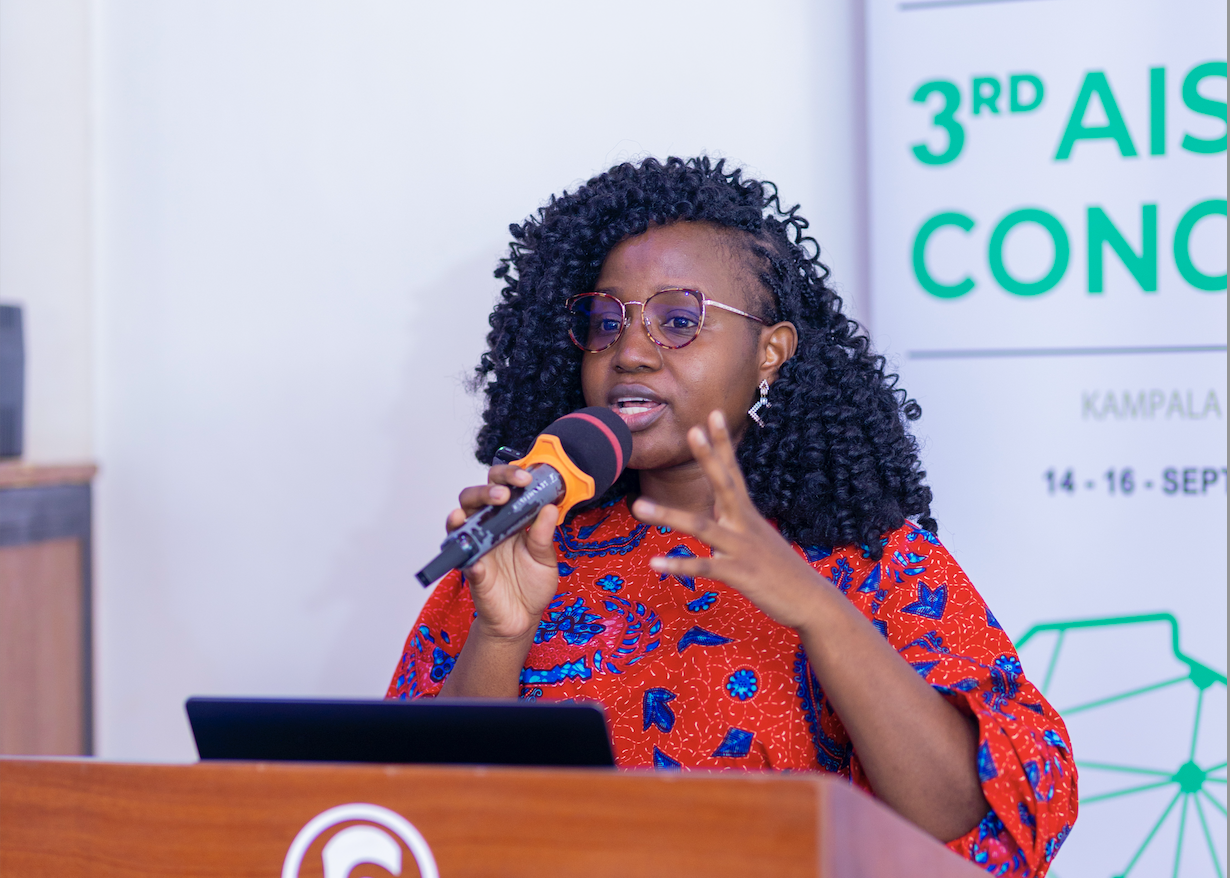
On 30 July 2026, AISESA’s Cluster 5: Building Institutions and Skills in Africa, held the inaugural session of its Capacity Webinar Series. The session introduced an argument the cluster has also been developing in writing.
The session grew out of a difficulty Cluster 5’s members had run into in conversation after conversation: the word ‘capacity’ was being asked to carry several distinct things at once, be it individual skill, institutional strength or political will, without anyone specifying which was meant. The webinar series offers a space to work through these ambiguities in public, one session at a time.
Prof. Youba Sokona's opening remarks were provocative. He asked “how many people in the audience had sat through a project review that closed with the finding that the project had failed 'due to lack of capacity'”. This is a diagnosis he described as having recurred across four decades of energy-sector reform in Africa, to the point that it had, in his words, “stopped meaning anything.”
Prof. Sokona's critique of technocratic training has a close counterpart in public administration research on what Andrews, Pritchett and Woolcock (2017) call capability traps i.e., governments and institutions adopting reforms that make them look more capable, borrowed from elsewhere, without the underlying capability to make those reforms function. That is close to Sokona's own description of capacity building that trains people to use tools designed elsewhere, to implement frameworks developed elsewhere, to meet standards set elsewhere.
Country ownership was made a formal principle of aid effectiveness in the 2005 Paris Declaration on Aid Effectiveness and extended toward a more democratic conception of ownership at the 2011 Busan forum, meaning the international development architecture has formally endorsed something close to Sokona's position for two decades, alongside a persistent gap between that endorsement and practice on the ground (OECD, 2005; OECD, 2011).
Capacity as agenda-setting
His proposed correction is now the organising claim of the cluster's work, that “capacity is not the ability to implement someone else's agenda, but the ability to set and pursue one's own.” He illustrated the distinction with his own institutional history when the African Renewable Energy Initiative was established, the EU's first offer was free technical experts, which he declined, on the grounds that accepting them would have settled the question of direction before AISESA had asked it.
Prof. Ambuj Sagar and Prof. Sonja Klinsky organised the same claim differently, the former by process, and the latter by structure. Sagar's organising device was a graphic from the Global Sustainable Development Report 2023, of which he was a contributing author. The report describes transformation as movement along an S-curve: an incumbent, unsustainable system in gradual decline, moving through destabilisation, breakdown and phase-out, while an alternative system moves through emergence, acceleration and stabilisation, with 'levers' and 'impediments' shaping the pace at each stage (Figure 1).
Prof. Sagar's argument was that different points on that curve call for different capacities, and he proposed five: (a) strategic direction and foresight, the capacity to decide, through genuine societal deliberation, what the curve should look like in the first place; (b) generation of new alternatives, meaning the room to pilot and test solutions in a local context rather than adopt them wholesale; (c) coordination of actors across manufacturers, financiers, project developers, universities and policymakers; (d) identifying and overcoming impediments, including organised resistance from incumbent interests and, in the fossil-fuel sector specifically, deliberate misinformation; and (e) learning, since no transformation pathway runs smoothly and the capacity to course-correct is itself a resource that has to be built rather than assumed. He closed by proposing that “capacity is not just a means of implementation, but a means of transformation.” A reframing that aligns with a broader critique in the literature that capacity is routinely treated as a byproduct of programmes rather than a central design element (Klinsky & Sagar, 2022).
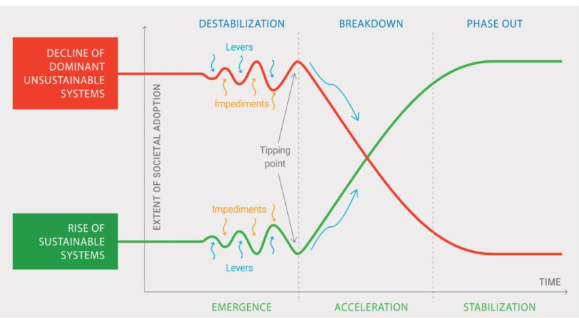
Figure 1. The S-curve of transformation, Global Sustainable Development Report 2023 (United Nations GSDR, 2023), as referenced by Prof. Sagar during the session.
Prof. Klinsky presented a sketch of the framework Cluster 5 has been developing (Klinsky et al., 2026), which offers a structural perspective. The framework places a country's capacities inside a frame bounded, below, by its developmental context and, above, by its position in the global system, with three tiers of domains nested in between: (a) generic capacities that matter for any sector (social inclusion and visioning, public sector governance, environmental integrity); (b) sectoral capacities specific to energy but not to any one technology (skills and knowledge, the policy and regulatory landscape, absorbable finance); and (c) energy-specific capacities tied to a particular technology or pathway, which the framework treats as necessarily variable e.g. the requirements for distributed solar are not those for green steel (Klinsky et al., 2026).
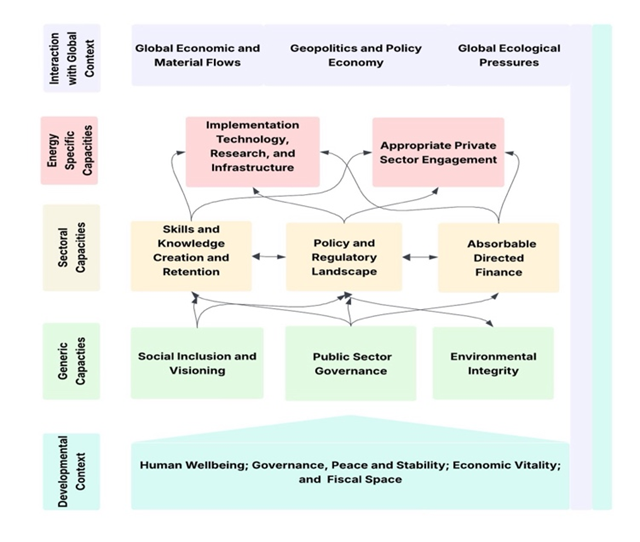
Figure 2. Cluster 5's systemic capacity framework for sustainable energy for development in Africa
Prof. Sagar and Prof. Klinsky's presentations are compatible; while Prof. Sagar's five capacities describe what must happen at different points in a transformation, Prof. Kilnsky’s presentation from Cluster 5's eight domains describe where, structurally, those things must happen.
Prof. Sagar's first capacity on strategic direction and foresight calls for genuine societal conversation involving diverse stakeholders, one that I believe is not just a fair standard, but one that also treats the hard part as capability rather than politics. Agenda-setting inside African states is itself a contested process, shaped by the same asymmetries of power, patronage and institutional access that determine who gets to sit in the room.
We closed the session with a reminder on Cluster 5's overall approach to capacity, noting that any claim about 'lack of capacity' needs to specify capacity at what level (individual, institutional, or national) because the three do not move together automatically. A well-trained individual does not guarantee a functioning institution; a well-governed institution does not guarantee national direction-setting. Capacity assessed at one level does not aggregate cleanly to capacity at another, and that global forces bear on all three simultaneously. It also gives the two frameworks above a practical use in diagnosis, i.e., before asking which domain or which process capacity is missing, it helps to be clear which level of the system is under discussion.
Tensions raised by the network
Discussion with participants returned to four broad themes. On whose agenda, contributors noted how rarely African policymakers are involved in designing major continental energy initiatives, and cautioned that moving agenda-setting home does not by itself make it more inclusive. On time, participants stressed that capacity building cannot be a matter of arriving to complete a task set by international funders and then leaving. On knowledge and policy, some described the pathway carrying research to policymakers as broken, while others argued that policy is always shaped by knowledge, and that the real question is whose knowledge counts. Finally, on retention, participants asked whether capacity can be depleted as well as built, a question the panel agreed is central even without a clear solution, noting that talent is plentiful but what is often missing is the right institutional home for it.
Next steps and how to engage with the Cluster
Cluster 5 now holds fortnightly cross-cluster discussions to test and refine the eight domains. The documents we have used in the past meetings are available in this folder. The cluster’s next webinar will also be in the coming weeks discussing capacity and higher education institutions. Practitioners, researchers and institutions can take part by joining these discussions series and, as Sokona invited, sharing “questions, documents, or ideas” with the cluster, including cases where capacity was built, lost or bypassed. These will inform the planned Learning Observatory.
References
AISESA (2026) People, Institutions, and the System: Rethinking ‘Capacity’ for Sustainable Energy in Africa. Capacity Seminar Series, Session 1, 30 July. Webinar transcript, unpublished.
Andrews, M., Pritchett, L. and Woolcock, M. (2017) Building State Capability. Oxford: Oxford University Press.
Klinsky, S. et al. (2026) The Case for Systemic Capacity in Africa’s Efforts Towards Sustainable Energy for Development. Unpublished manuscript, AISESA Cluster 5.
OECD (2005) Paris Declaration on Aid Effectiveness. Paris: OECD.
Sahara Reporters (2023) ‘Bayero University Kano’s multi-billion naira solar abandoned to rats, rodents amid poor electricity supply’, 14 March.
United Nations (2023) Global Sustainable Development Report 2023. New York: United Nations.