
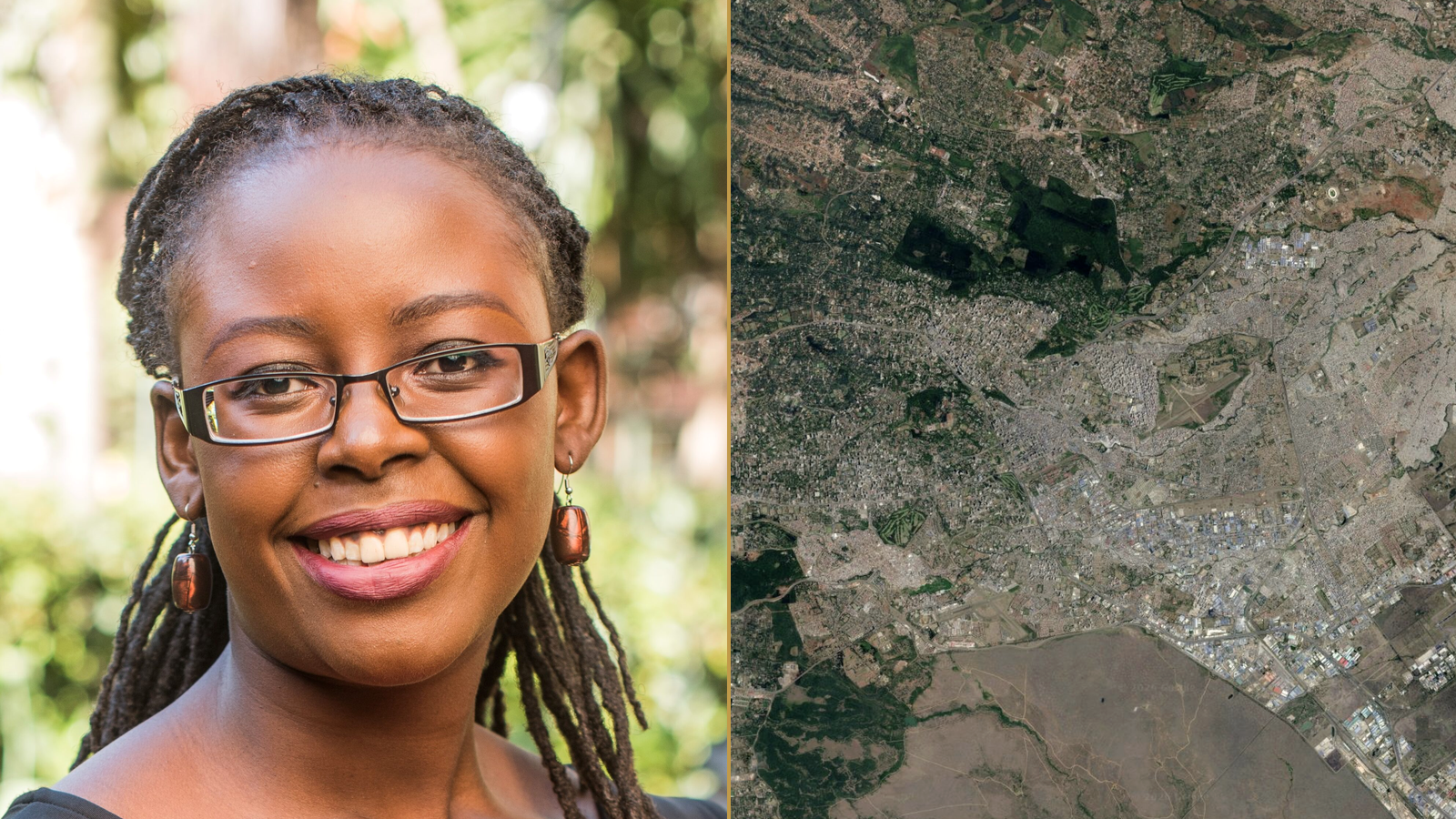
Elsie Onsongo is co-founder and Director of the Nuvoni Centre for Innovation Research in Nairobi. She leads research programmes on energy transitions, urban development, agri-food systems and innovation policy across East Africa. Much of her work sits between research, policy and practice: turning evidence into strategies and plans that get used, and bringing diverse stakeholders into the same conversation while keeping the problems we are trying to solve, and the solutions, centre stage.
For readers meeting you and your work for the first time: what has your path in African innovation and energy looked like, and what led you to co-found the Nuvoni Centre for Innovation Research?
I began in information technology, and then became interested in how technology gets managed, which drew me into innovation. In Kenya at that time the two were closely tied together. My doctorate was in the economics of innovation, and it opened up a range of perspectives on how science, technology and innovation enable sustainable development, and how they sometimes impede it.
The difficulty I keep returning to is that in Sub-Saharan Africa a technological fix is often treated as the answer to a broader societal problem. Mini-grids, solar home systems, ‘modern’ clean cooking technologies, productive use appliances, green hydrogen, etc, are all presented as solutions to energy access and low carbon development. What sits underneath those problems is systemic. Poverty and vulnerability are part of it, but so are informality and insecure tenure, institutions and regulation written for a different system, public investment that funds capital and not operation and maintenance, and the political economy of who gains and who pays. A technological fix tends to be short-lived if it is not thought through within the whole socio-technical system and those dynamics.
I co-founded Nuvoni because we need more places and spaces where research of that kind can be done. Nuvoni lets us follow the evidence where it leads and take problems apart without prescriptions, from inside the context we are studying rather than at a distance from it. It also lets us collaborate across borders and draw on perspectives and theories from wherever they come, while testing what actually makes sense here. It is also somewhere early career researchers can take part in conversations that are often closed to them.
A technological fix tends to be short-lived if it is not thought through within the whole socio-technical system and those dynamics.
Your recent paper in Nature Sustainability — co-authored with Dr. Lucas Straub and Dr. Philipp Trotter, among others — examines the circular economy debate in the Global South. Where do the dominant framings and assumptions in that literature fall short, and what does the view from the continent offer that global conversation is missing?
Circularity is not new on the continent. What our review shows is that circular practice here is largely bottom-up: community-level, often informal, and already embedded in how people live. The theory, though, was codified in Europe, North America and East Asia around industrial systems and policy, and it now travels southwards as a ready-made template.
The motivations differ too. In the dominant literature, circularity is a response to overconsumption and its environmental costs. In our context, it is driven by socio-economic need and by scarcity, but also by norms and cultural values, by solidarity and frugality, and by knowledge carried in long-standing practice and oral tradition. The dominant literature barely registers that second part, which is why circularity here is so often read as nothing more than making do.
Our argument is that context shapes what a circular economy is, who drives it and why. Researchers working in these countries should start from locally grounded practice, and test whether the circular economy is even the right frame, rather than importing one built on techno-economic terms. The learning runs both ways: the industrial focus in the North has something to gain from community-level circularity here.
You have spent a lot of time at the interface between research, policy and practice. What assumptions did you hold about that interface, and what have you learned about what makes research usable?
I used to assume that evidence travels on its own, upwards into policy and outwards into practice. It does not. Research, policy and practice sit in separate silos and rarely speak to one another unless somebody deliberately brings them around the same table, held together by the societal challenge they share.
The responsibility falls on researchers to reach out, and then to go further and build the platforms where that exchange can happen without bias. That means taking seriously what policy needs, taking experiential knowledge from practice just as seriously, and building research agendas together around those challenges, while not deprioritising basic research. It is not only about translating findings so that policy can use them. It is about doing the research with people in policy and practice, so that the problem is defined together and the data is interpreted together, throughout the work rather than at the beginning or the end.
Research, policy and practice sit in separate silos and rarely speak to one another unless somebody deliberately brings them around the same table, held together by the societal challenge they share.
Two pieces of our work show what this looks like. In informal settlements we are working on electrification, an intractable problem that we are still some way from solving, with marginalised communities, policy actors and practitioners exchanging and learning from one another, and the evidence produced together. The Kenya National electric Cooking Strategy was the same approach at national scale. The baseline study, the household data collection, the scenario modelling, the choice of scenarios and the assumptions behind them were not settled inside academia. They were worked out with stakeholders and validated with them.
4. What is something you are working on at the moment that you are particularly excited about?
We are starting a new research programme on disability and energy transitions. It is new ground for me, and it is a clear gap: in our policy, in how our infrastructure is set up, in how we frame energy access, and in how interventions are designed. What we are doing at the moment is working out what it would take to set a research agenda around disability, energy access and transitions. That means shifting the framing, bringing social inclusion into the mainstream of this work, and thinking properly about intersectionality.